Application
Development
ProZenTek provides Application Development and Maintenance Outsourcing services that escort to business process enhancement...
ProZenTek provides Application Development and Maintenance Outsourcing services that escort to business process enhancement...
ProZenTek provides Application Development and Maintenance Outsourcing services that escort to business process enhancement. This allows in reduction of costs and enables business growth. ProZenTek's Application Development and Maintenance Services is a part of its IT Services Group.
Any enterprise requires focus on its core business rather than focusing on its IT Services. We enable enterprises to focus on the core business related initiatives and we take care of all the maintenance services. We undertake strategic consulting to facilitate improvements in the efficiency of IT Systems and IT Services.
Application Development and Maintenance Services offers the design and development of new application features at sensible cost. We offer migration services from legacy systems to next generation systems and platforms. We manage mission critical business process improvements at a nominal cost.
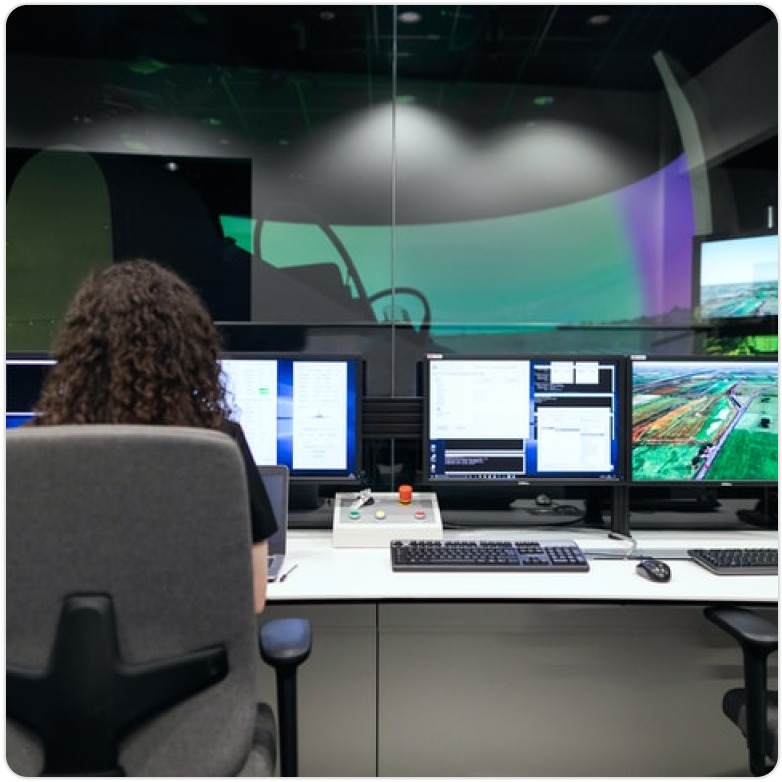
The Application Development and Maintenance Practice of the IT Services Group have great proficiency in all industry standard development methodologies viz., Waterfall, Iterative, Spiral, Prototype, Component based, Rational Unified Process (RUP), Rapid Application Development (RAD), Agile and XP. We offer strategic consulting to our clients in IT Services which provides scope for efficient business process.
The iBUILD delivery model is an ProZenTek’s proprietary design crafted by the Center of Excellence (CoE) for application development and maintenance of our IT Services Group. The iBUILD methodology is based on DTAGUARD's fundamental principle of facilitating clients with business process improvements through strategic consulting for IT Services Outsourcing. This model brings the best practices of a global delivery model with 14 years of offshore based project execution. It is based on CMM level 5 software development processes and proven Six Sigma approach in Application Development and IT Services. Certain Six Sigma techniques have been incorporated into the iBUILD methodology for better management of customer requirements and ensuring robust fail-proof design. They include
iBUILD breaks the application development process into five phases with specific toll gates for each phase, based on the requirement of customer, interaction and utilization of offshore resources wherever possible.

Requirement gathering is done at client site with an experienced and skilled team from ProZenTek which also undertake requirement analysis. For complex initiatives and in case of multi-site requirement gathering, PROZENTEK employs a ‘Quality Function Deployment’ (QFD) to identify ‘Critical to Quality’ (CTQ) requirements of stakeholders. ‘Voice of Customer’ (VoC) tools and techniques are used to understand customer ‘wants or needs’ that are subsequently flowed down using QFD from user requirements to design.
Design is usually performed offshore with onsite participation driven by degree of customer involvement in defining architecture. Architecture definition/ high level design is driven by reference architecture from a knowledge base available in iNODE, the technology from Center of Excellence (CoE) within ProZenTek. For critical and complex components, Failure Mode and Effect Analysis (FMEA) technique is used to make the design more robust. Pugh Matrix trade off analysis technique is used to choose the best of the design options for solution. Application development and testing are executed offshore. Learning and reusable artifacts from past engagements are extensively used, leveraging the Knowledge Management framework within ProZenTek.
Depending on the client’s requirement, ProZenTek enters into a long-term support (or maintenance) contract. We offer a cost effective solution leveraging offshore, and can bring in year-on-year cost reduction by continuously improving the support processes leveraging Six Sigma DMAIC methodology and other tools & techniques. A metrics management program ‘Open Envelop Methodology’ (OEM) and DMAIC causal analysis tools driven by ProZenTek are used to identify areas for improvement.
The Application Development and Maintenance Team of the IT Services Group are proficient in Multi Threaded Time Boxed Methodology. This industry standard methodology offers business process improvement in all the areas of software development.
The Guiding Principles of the Multi Threaded Time Boxed Methodology are :

Short time boxes of 4-6 weeks
Multi threaded Time Boxed Process
Parallel delivery of development and test artifacts
Continuity and consistency of core and integration teams
The expected business benefits are cycle time reduction, faster time to market, high quality and scope to accommodate changes. The prioritized requirements will be funneled through to various teams to perform detailed requirement analysis. The approach is such that when one team completes requirement gathering and starts with design, the next team carries out the rest of the requirements. Finally, the requirement will be delivered in various packets of logical unit.
We provide IT solutions to companies in all business domains


4 Brady Gladys Plaza, Senapati Bapat Marg, Lower Parel, Mumbai-13


+1 22 40313119
+1 22 40313120
Copyright @ ProZenTek 2022. All Rights Reserved.